
Writing an economics research paper can feel like climbing a mountain. But with the right tools and guidance, you’ll reach the summit without breaking a sweat. Let’s break it down step by step so you can craft a paper that stands out.
What Makes an Economics Research Paper Unique?
An economics research paper is not just any academic document; it’s a structured exploration of economic theories, policies, or phenomena. Unlike essays or opinion pieces, it relies heavily on data, models, and empirical evidence. For example, while a history paper might focus on storytelling, an economics paper dives into cause-and-effect relationships, statistical analysis, and real-world applications. According to Investopedia, economics papers often tackle issues like market behavior, fiscal policy, or global trade—topics that require precision and clarity.
One key attribute of these papers is their reliance on quantitative methods. Rarely will you find an economics paper without graphs, tables, or regression analyses. These elements make your arguments stronger and more credible. Personally, I’ve seen students struggle because they skip this step, only to realize later how much it adds to their work.
Why Is Structure So Important in This Type of Writing?
The structure of your paper acts as its backbone. Without it, even the best ideas fall flat. A typical economics research paper follows this order: introduction, literature review, methodology, results, discussion, and conclusion. Each section has a specific role. The introduction sets the stage, while the methodology explains how you gathered and analyzed data.
Here’s a quick table to illustrate the purpose of each section:
| Section | Purpose |
|---|---|
| Introduction | Introduce the topic and state the research question. |
| Literature Review | Summarize existing studies related to your topic. |
| Methodology | Describe the tools and methods used for analysis. |
| Results | Present findings using charts, graphs, or tables. |
| Discussion | Interpret the results and explain their significance. |
| Conclusion | Summarize key takeaways and suggest areas for future research. |
This framework ensures your paper flows logically. Think of it as building a house: every brick needs to be in the right place.
Where Do You Start When Writing About Economic Phenomena?
Start with a clear research question. Ask yourself: What problem am I trying to solve? For instance, are you analyzing inflation trends or studying unemployment rates? Your question should guide everything else. According to Wikipedia, good research questions are specific, measurable, and relevant to current economic debates.
Once you have your question, gather data from reliable sources like the World Bank, International Monetary Fund (IMF), or peer-reviewed journals. I once worked with a student who chose a vague topic like “the economy.” After narrowing it down to “the impact of minimum wage laws on small businesses,” their paper became much sharper and more engaging.
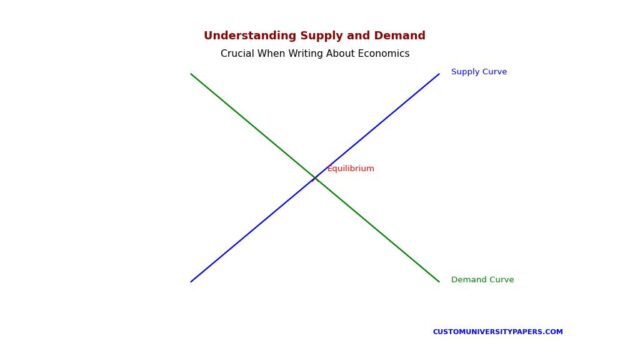
Caption: Understanding supply and demand is crucial when writing about economics.
Now that we’ve covered the foundation of your economics research paper, let’s focus on making it shine. This section will guide you through crafting strong arguments, avoiding mistakes, and refining your work for maximum impact.
How Do You Build a Strong Argument in Your Paper?
A strong argument is the heart of any economics research paper. It’s not enough to present data—you need to explain what it means and why it matters. For example, if you’re analyzing the effects of tax cuts on consumer spending, don’t just show numbers. Explain how those numbers reflect broader economic trends or policy implications.
One expert tip is to use counterarguments. Anticipating objections shows you’ve thought deeply about your topic. For instance, if your paper argues that free trade boosts GDP, address potential downsides like job losses in certain industries. According to The University of Nevada, addressing opposing views strengthens your credibility and makes your argument more persuasive.
Personal anecdote time: I once reviewed a paper where the author ignored conflicting evidence. Their conclusion felt weak because they hadn’t acknowledged alternative perspectives. Don’t make the same mistake—embrace complexity.
What Are Common Pitfalls to Avoid?
Even seasoned writers stumble over common traps when writing economics papers. One big one? Overloading your paper with jargon. While terms like “elasticity” or “Gini coefficient” are essential, overusing them can alienate readers. Strike a balance between technical language and clarity.
Another pitfall is relying too heavily on secondary sources. Primary data—like surveys or experiments—adds originality to your work. If you’re studying housing prices, consider collecting local market data instead of only citing existing studies. A report by Harvard Business Review highlights how original research sets top-tier papers apart from mediocre ones.
Lastly, avoid vague conclusions. Your ending should tie everything together and offer actionable insights. For example, if your paper examines income inequality, suggest policy changes or areas for further study.
How Can You Polish Your Final Draft?
Polishing your paper transforms it from good to great. Start by revising for clarity. Read each sentence aloud—is it easy to understand? If not, simplify. Next, check for consistency in formatting, citations, and tone. Tools like Grammarly or Zotero can help streamline this process.
Don’t forget visuals! Graphs, tables, and charts make complex data easier to digest. For instance, a line graph showing unemployment rates over time can convey trends faster than paragraphs of text. Just ensure your visuals are labeled clearly and referenced in the text.
Finally, get feedback. Share your draft with peers, professors, or mentors. They might spot errors or suggest improvements you missed. I always tell my students: a second pair of eyes is invaluable.
FAQs
Most economics papers range from 10 to 25 pages, depending on the assignment. Focus on quality over quantity—a concise, well-researched paper beats a lengthy but shallow one.
Absolutely! Real-world examples add depth and relevance. For instance, discussing Greece’s debt crisis can illustrate fiscal policy challenges better than abstract theory alone.
Economics papers typically use APA or Chicago style. Check your instructor’s guidelines to be sure. Consistent formatting boosts professionalism.
Ready to Elevate Your Writing?
Writing an economics research paper doesn’t have to feel overwhelming. With a solid structure, compelling arguments, and attention to detail, you’ll create a document that impresses both readers and evaluators.
Need personalized help? At Custom University Papers, our experts specialize in crafting high-quality academic content tailored to your needs. Whether you’re stuck on methodology or need full drafting support, we’ve got you covered.
Get started today and take the stress out of your next economics paper!
